 vs

Livestorm vs Zoom Webinars
Both are in our Virtual, webinar & streaming category. Livestorm is best for marketing teams running recurring webinars, product demos and on-demand content programs; Zoom Webinars is best for organizations already on Zoom that want affordable, familiar webinars for marketing, investor or internal audiences.
The short answer: Livestorm is a browser-based webinar platform built for marketing teams and priced per unique attendee, while Zoom Webinars is Zoom's broadcast product priced by attendee capacity and scaling to 100,000 attendees. Livestorm suits marketing teams running recurring demand-gen and on-demand webinars that want EU hosting and spend tied to real attendance; Zoom Webinars suits companies already on Zoom that need large audiences or want webinars and multi-session events from one vendor.
Built from each vendor's own website and our research profiles. How we research
Quick verdict
Choose Livestorm if:
- Its best fit describes you: marketing teams running recurring webinars, product demos and on-demand content programs.
- You want a free trial before buying; Zoom Webinars doesn't list one.
- This matters to you: Fully browser-based with no download for attendees or speakers.
Choose Zoom Webinars if:
- Its best fit describes you: organizations already on Zoom that want affordable, familiar webinars for marketing, investor or internal audiences.
- You'd like a per-event pricing option.
- Your security review asks for a publicly documented SOC 2 Type II report.
- This matters to you: Attendees already know the Zoom client, reducing join friction.
Based only on what each vendor publishes. Ask both for a demo with your own event scenario before you decide.
Side by side
“Not published” means we couldn't find it on the vendor's own pages.
LivestormZoom WebinarsStrengths and considerations
Livestorm
What stands out
- Fully browser-based with no download for attendees or speakers
- EU-hosted with ISO 27001 and an optional US video hosting region
- Usage-based pricing per unique attendee rather than per host seat
- Very large integration library including sales engagement and ad platforms
Worth checking
- Capped at 3,000 live attendees per event, so not suited to very large broadcasts
- Major enterprise CRM integrations (Salesforce, Marketo, Dynamics, Pardot) require the Enterprise plan
- Focused on online events; no in-person registration, check-in or onsite tools
Zoom Webinars
What stands out
- Attendees already know the Zoom client, reducing join friction
- Low published entry price relative to dedicated webinar platforms
- Exceptionally broad security and government certification portfolio
Worth checking
- Native marketing automation integrations (Marketo, HubSpot, Eloqua) aren't highlighted on the product pages; check Marketplace apps
- In-person event logistics such as check-in and badging are outside the Webinars product
- Advanced production, AI content and multi-session features require higher tiers
Notable customers
Organizations each vendor names on its own website: customer stories first, then testimonials and logos.
Livestorm
The main difference between Livestorm and Zoom Webinars
The main difference is focus and scale: Livestorm is a marketing webinar tool that runs entirely in the browser and caps live events at 3,000 attendees, and Zoom Webinars is a broadcast product on Zoom's video infrastructure that supports up to 100,000 attendees. Both cover registration, polls, Q&A, chat, simulive or automated sessions and on-demand replays, so most buyers decide on audience size, pricing model and CRM fit.
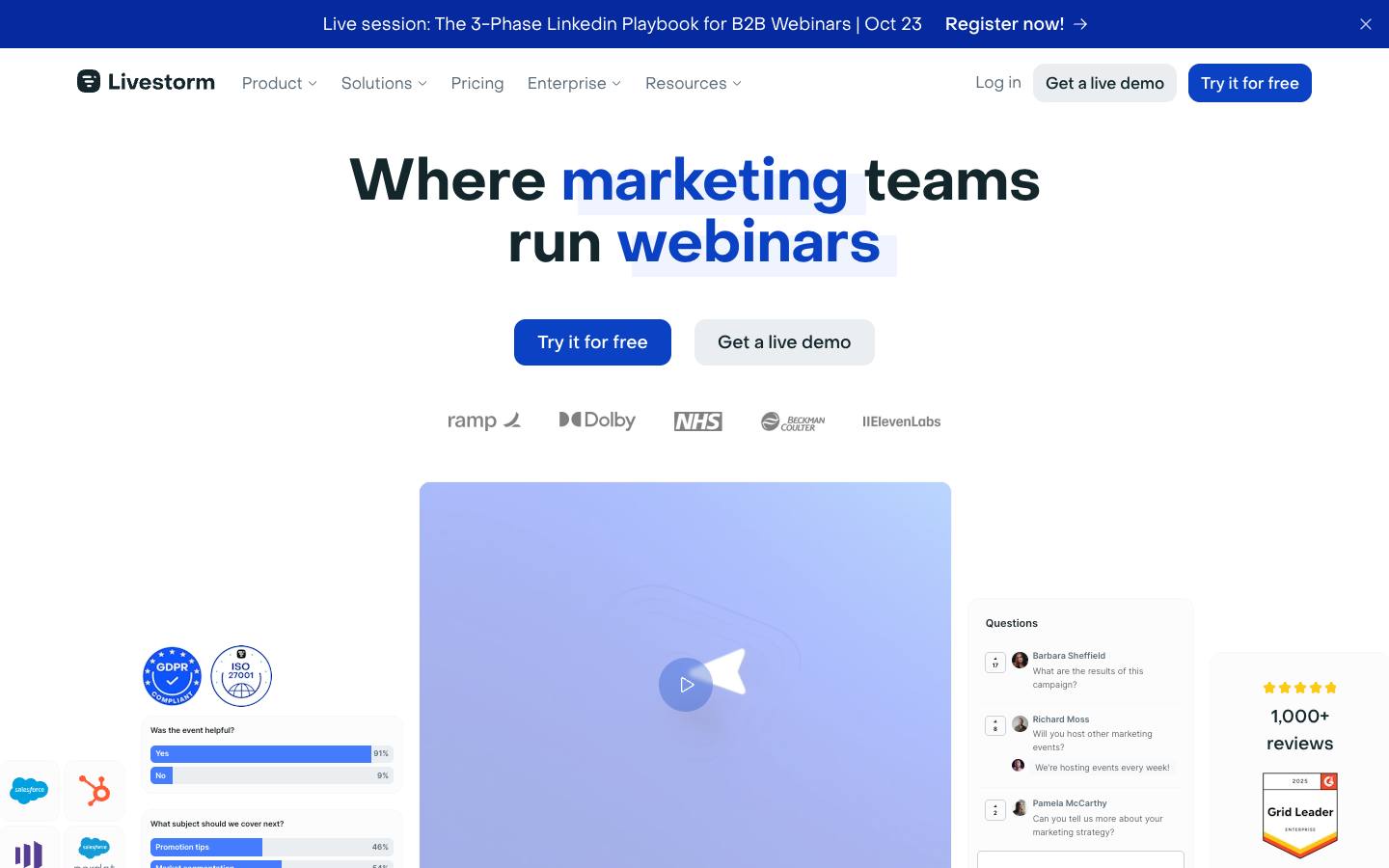
Livestorm describes itself as the place where marketing teams run webinars, with EU hosting, ISO 27001 certification and GDPR compliance called out on its homepage, plus dedicated on-demand and automated webinar workflows. Zoom Webinars leans on familiarity: most B2B attendees already have the Zoom client, and Zoom sells the product in three tiers (Webinars, Webinars Plus and Events) so a team can move up to multi-session virtual events without switching vendors.
Neither is an in-person event platform. Zoom's top Events tier adds hybrid tools such as e-badges and QR check-in, but conference registration, onsite badging and booth lead capture usually still need a separate tool.
Livestorm vs Zoom Webinars pricing
Livestorm charges per unique attendee and Zoom Webinars charges per month by attendee capacity, so which is cheaper depends on how many people you actually reach (checked October 2026). Livestorm Pro costs €2.50 per attendee credit, bought as a yearly pack, with unlimited team members and events, sessions up to 4 hours and up to 3,000 live attendees. Enterprise is custom-priced and adds 12-hour sessions, custom analytics, dedicated customer success and the Enterprise-only connectors.
Zoom publishes three self-serve tiers: Webinars at $89 a month (or $66.67 a month billed annually), Webinars Plus at $99 a month ($82.50 annually) and Events at $149 a month ($124.17 annually). Those are entry prices; Zoom says subscriptions are priced by attendee capacity, up to 100,000. Webinars Plus and Events can also be bought as pay-per-attendee bundles that are valid for 12 months.
As a rough guide, Livestorm's credits favor programs with modest or irregular attendance, while Zoom's capacity plans favor teams running many webinars to the same large audience. Model both against last year's real attendee counts, and remember that Livestorm counts replay and on-demand viewers as credits too.
Features that matter for B2B webinar programs
For pipeline webinars, the key differences are CRM packaging and production depth. Livestorm's pricing page lists HubSpot as available on Pro, while Salesforce, Marketo, Pardot, Microsoft Dynamics and Brevo are marked Enterprise plan only. Zoom's Webinars page says participant data can connect straight to your CRM and points to a Salesforce app on the Zoom App Marketplace; Zoom has also published Marketo Engage, Pardot and HubSpot apps for Webinars.
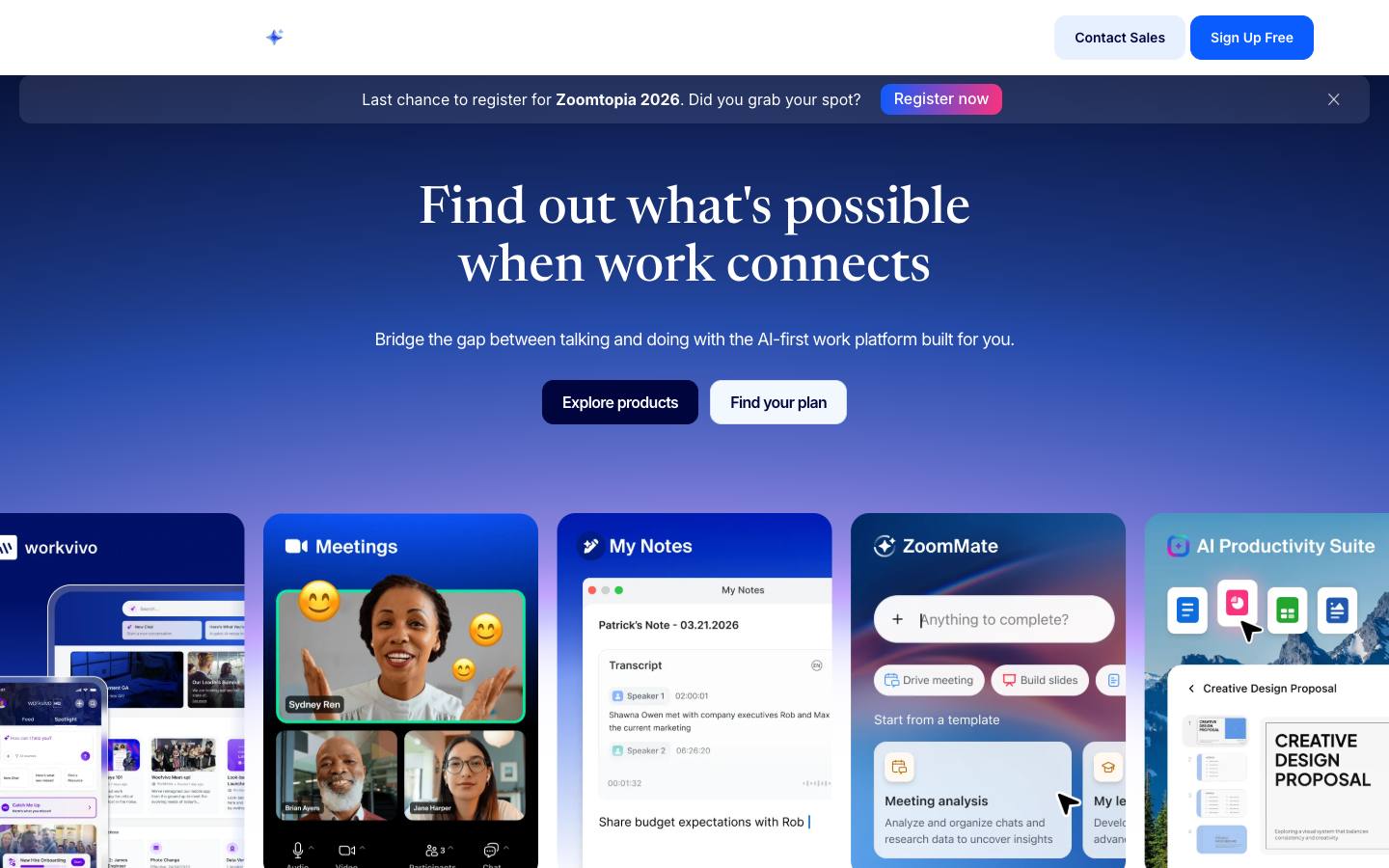
Zoom's production tools scale by tier: the base Webinars plan includes polls, Q&A, chat, reactions, AI smart chapters and RTMP streaming to YouTube, LinkedIn and Facebook, and Webinars Plus adds simulive, a backstage, breakout rooms, a lobby, 1080p video and AI-generated event pages. Livestorm includes polls, Q&A, chat, breakout rooms and automated or on-demand sessions, and sells restreaming, live translations and its AI clipping studio as add-ons.
If your team cares most about attendees joining from a browser link with no install, Livestorm is built around that. If you care most about very large audiences, scene-based production and a client your attendees already know, Zoom Webinars is the closer fit.
Which should you choose?
Choose Livestorm if you're a small or mid-sized marketing team running recurring product demos, nurture webinars and on-demand content, want EU-hosted infrastructure, and are happy with a 3,000-attendee ceiling. Budget for Enterprise if Salesforce or Marketo sync is a must.
Choose Zoom Webinars if your company is already standardized on Zoom, you need audiences above a few thousand, or you expect to grow into multi-track virtual conferences with sponsors and networking on Zoom's Events tier. Confirm which CRM apps you'll rely on before you buy, since they come from the Zoom App Marketplace rather than the pricing page.