Best Event Ticketing Software for B2B Events in 2027: The Buyer's Shortlist
By EventMarketingSoftware.com · Published October 18, 2026 · 12 tools compared
For paid B2B events, Tito is the strongest all-round event ticketing software in our data: a 3% fee per paid ticket capped at €25, nothing on free tickets, and payouts through your own Stripe or PayPal account. pretix is the pick for trade fairs and self-hosting, idloom for European teams that need VAT invoices, and Eventzilla for training companies selling many small paid sessions.
Our top picks
- 1
 TitoBest for tech, developer and B2B conferences that want an embedded checkout with capped per-ticket feesFrom €2.50/ticket
- 2
 pretixBest for trade fairs and European conferences that want capped fees, seating plans and the option to self-hostFrom €0.50/ticket
- 3
 idloomBest for European organizers that need VAT invoices and no per-ticket fees across several paid eventsFrom €150/month
Key takeaways
- Most ticketing tools for paid B2B events charge a percentage per ticket rather than a subscription. In our data the published rates run from Swarmtix at $0.99 plus 1.5% per ticket to Luma's 5% on its free plan, with Tito at 3% and pretix at 2.5%.
- Fee caps matter more than headline rates for B2B tickets priced in the hundreds or thousands. pretix caps its fee at €15 per ticket, Konfeo at €7 and Tito at €25, so a €1,500 conference pass costs far less to sell than the percentage suggests.
- Flat subscriptions win once volume is high. idloom runs from €150 to €1,150 a month billed annually with no per-ticket fees, Eventzilla's Scale plan starts at $200 a month billed annually (its comparison table says $1,999 a year), and Accelevents starts at $7,500 for a single event.
- Invoicing is where B2B ticketing differs from consumer ticketing. Companies often pay by invoice or purchase order, so check for automatic invoices with VAT (idloom, Checkin, Konfeo, pretix) before you compare anything else.
- Native CRM sync is rare among ticketing-first tools. Accelevents and idloom connect to Salesforce and HubSpot directly, Eventleaf does on its quote-based Ultimate plan, and most per-ticket tools rely on Zapier, webhooks or an API.
Free tool: Event software RFP builder. Pick the categories you're buying and get a requirements list, security questions and a weighted scoring sheet you can export to a spreadsheet.
Side-by-side comparison
The same criteria for every pick: published ticket fees, payment and payout control, invoices and tax, ticket types and seating, crm and data sync, security documentation. A dash means the vendor doesn't publish it.
| Tool | Starting price | Free plan / trial | CRM | Capterra | App Store | Security |
|---|---|---|---|---|---|---|
| Tito | From €2.50/ticket | Free plan, Free trial | Salesforce, HubSpot | ★ 5.0 (38) | – | – |
| pretix | From €0.50/ticket | Free plan | HubSpot | ★ 5.0 (1) | – | ISO 27001, DPA |
| idloom | From €150/month | Free plan, Free trial | Salesforce, HubSpot, Dynamics | – | – | ISO 27001, DPA |
| Eventzilla | From $1.50/registration | Free plan | Salesforce, HubSpot | ★ 4.4 (393) | – | DPA |
| Accelevents | From $7,500/event | Free trial | Salesforce, HubSpot, Marketo | ★ 4.7 (164) | ★ 3.7 (23) | SOC 2 Type II, ISO 27001, SAML SSO |
| Checkin.no | From €1/ticket | Free trial | HubSpot | – | – | DPA |
| Konfeo | From €1/attendee | Free plan | – | ★ 5.0 (21) | – | DPA |
| Eventleaf | From $1/attendee | Free plan, Free trial | Salesforce, HubSpot, Marketo | ★ 4.8 (185) | ★ 4.2 (6) | – |
| KonfHub | From INR 2/percent of ticket | Free plan | – | ★ 4.8 (200) | – | DPA |
| Luma | From $59/month | Free plan | – | – | – | SOC 2 Type II, DPA |
| Swarmtix | $0.99 + 1.5% per paid ticket | Free plan | HubSpot | – | – | – |
| alf.io | Free (open source) | Free plan | – | – | – | SAML SSO |
Ticketing is a narrower job than registration. The questions that matter are how the platform charges (a percentage per ticket, a flat subscription or a mix), who holds the money and when it pays out, whether it issues proper invoices with tax, and how buyer data gets to your CRM. We compared 12 tools that B2B conference, training and summit organizers actually use, from open-source ticket shops to full event platforms with checkout built in.
If your events are mostly free and invitation-based, our guide to event registration software is the better starting point. This guide is for teams that sell tickets and care about fees, payouts, invoicing and seating.
Who this guide is for. This guide is for B2B organizers who sell tickets: conference producers, associations and member organizations, training and certification providers, tech and developer conferences, and marketing teams running paid summits or workshops. It covers per-ticket tools with no subscription through to flat-fee platforms and full event suites with ticketing built in.
Not sure which one fits your team?
Answer a few questions about your events, team and CRM and get a free shortlist of tools that fit, with pricing and security details side by side.
Get a free shortlistThe best event ticketing software for B2B events in 2027
We picked 12 ticketing tools and ordered them by fit for the main job: selling tickets to paid B2B events with fair fees, clean invoices and usable buyer data. The first picks are per-ticket specialists, followed by flat-fee platforms, regional specialists and lightweight options for side events. For each one, look at the fee model, who processes the payment and how the data leaves the tool.
1. Tito, best for tech, developer and B2B conferences that want an embedded checkout with capped per-ticket fees
- Price
- From €2.50/ticket
- Try it
- Free plan, Free trial
- Capterra
- 5.0/5 from 38 reviews
- Syncs with
- Salesforce, HubSpot
- Customers include
- Mozilla, NHS, Shopify
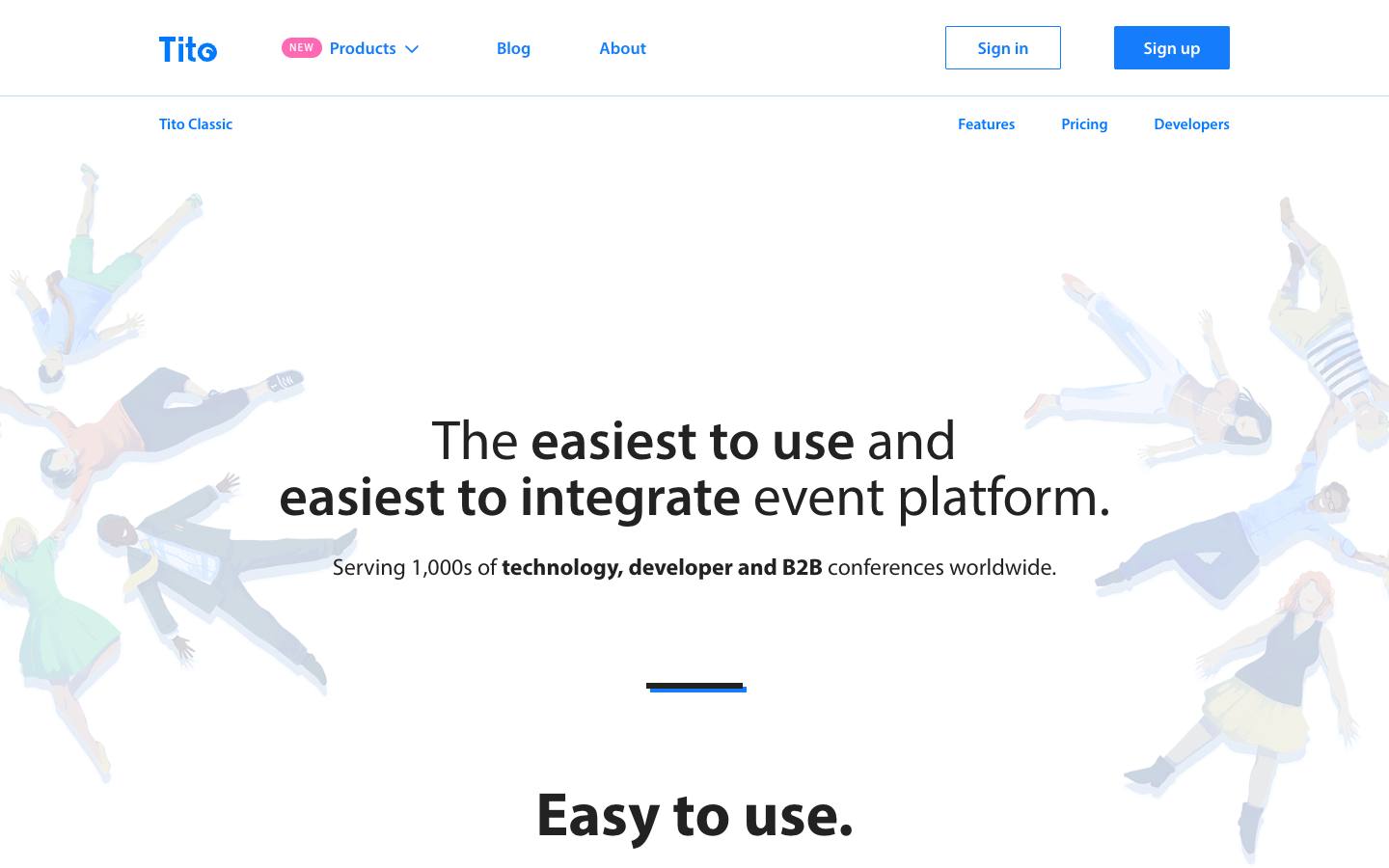
Tito is a ticketing and registration tool from Dublin-based Team Tito, founded in 2013. Organizers embed its ticket widget on their own website with a script tag and take payment through their own Stripe or PayPal account, so the money never sits with Tito. It's best known among technology and developer conferences.
More on TitoLess on Tito
Founded: 2013 · HQ: Dublin, Ireland · Team: 2–10 people · Formats: In-person
Pricing is published and simple: no fee on free tickets, 3% per paid ticket with the fee capped at €25 a ticket, and 2.5% for eligible charity, community and nonprofit events, with payment gateway fees billed separately (checked October 2026). There's no subscription or setup fee, and every feature is included at that rate. Attendees can look up orders, change details and download receipts themselves, which cuts support email for busy conferences. A separate Tito Pro product targets invitation-only professional events.
Named users include Shopify, Mozilla, Digiday, SmashingConf, BrightonSEO and Dublin Tech Summit, and Tito has a 4.97 rating from 38 reviews on Capterra. The trade-off is scope and size: the company describes itself as a team of about six, there's no event app or virtual venue, and no security certifications are published. HubSpot and Slack connections run through webhooks or Zapier, with Salesforce in a private beta integration platform.
- Self-service order lookup and receipts for attendees
What stands out
- 3% per paid ticket, capped at €25, and free for free tickets
- Payments go to the organizer's own Stripe or PayPal account
- Embeddable widget with custom CSS, JavaScript events and an API
Worth checking
- Very small team, with no security certifications published
- No native CRM sync; HubSpot runs through webhooks or Zapier
Best suited for. Tito suits developer, product and tech conferences that sell tickets from their own website and want low, capped fees without a contract. Pick something else if procurement needs SOC 2 or ISO 27001 paperwork or if you need native Salesforce sync.
2. pretix, best for trade fairs and European conferences that want capped fees, seating plans and the option to self-host
- Price
- From €0.50/ticket
- Try it
- Free plan
- Capterra
- 5.0/5 from 1 reviews
- Languages
- German, English, Dutch
- Syncs with
- HubSpot
- Security
- ISO 27001, DPA
- Customers include
- Messe Berlin, FOSSGIS, Heise Group
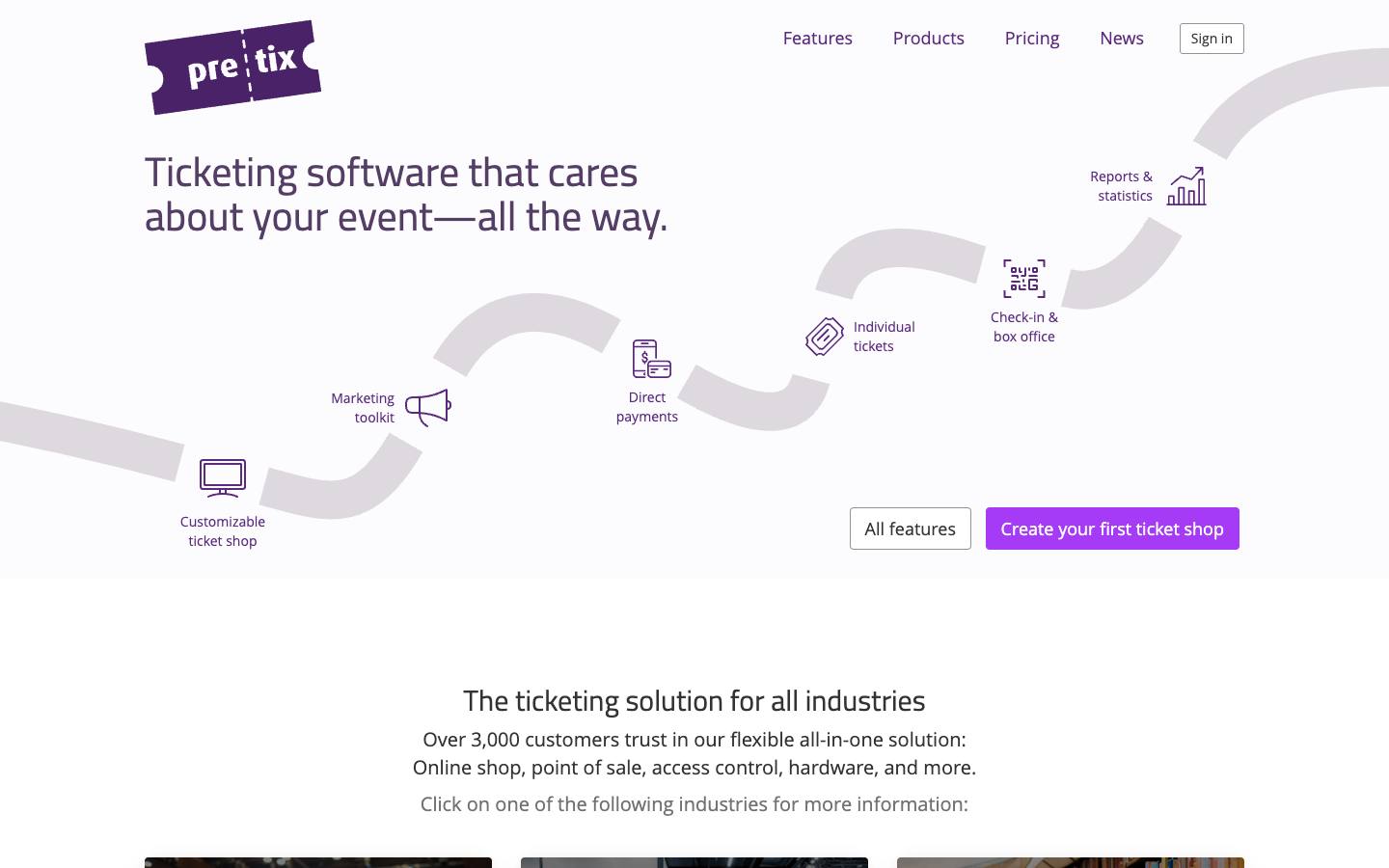
pretix is a German ticketing platform from Heidelberg, founded in 2014, offered as a hosted service or as self-hosted Community and Enterprise editions built on an open-source core. Beyond the ticket shop it covers access control with live badge printing, exhibitor lead scanning, a box office app, kiosks and a virtual venue.
More on pretixLess on pretix
Founded: 2014 · HQ: Heidelberg, Germany · Team: 11–50 people · Formats: In-person, Virtual, Hybrid
Hosted pricing is a percentage with a low cap: 2.5% of the ticket price, capped at €15 per paid ticket, with no monthly fee or minimum term (checked October 2026). The first 500 free tickets a year cost nothing, then free tickets are €0.50 each, and exhibitor lead scanning is €25 per active exhibitor. That cap makes it one of the cheapest ways in our data to sell high-priced conference passes. It supports Stripe, PayPal, Mollie, Adyen, Payone and SumUp, plus Peppol and ZUGFeRD e-invoicing plugins.
pretix is ISO 27001 certified with PCI DSS-compliant hosting, and customers include Messe Berlin, Heise Group, Shopware and KotlinConf. The company is owner-led and says it has no outside investors. The trade-offs are marketing depth and language: there's little built-in email marketing or CRM-style engagement, integrations come as plugins plus a REST API rather than Zapier, and the admin interface is available in German, Dutch and English.
- ISO 27001 certified with PCI DSS-compliant hosting
What stands out
- 2.5% per paid ticket, capped at €15, with no monthly fee
- Interactive seating plans, box office and kiosk apps
- Self-hosted open-source editions for full data control
Worth checking
- Limited marketing automation and CRM connectors beyond plugins and the API
- Admin interface in a small set of languages
Best suited for. pretix fits trade fair organizers, publishers and European conferences that sell many tickets, need seating or onsite access control and want a capped fee or a self-hosted install. Choose a CRM-connected platform instead if sales attribution in Salesforce or HubSpot is the main requirement.
3. idloom, best for European organizers that need VAT invoices and no per-ticket fees across several paid events
- Price
- From €150/month
- Try it
- Free plan, Free trial
- Languages
- 6 languages
- Syncs with
- Salesforce, HubSpot, Dynamics
- Security
- ISO 27001, DPA
- Customers include
- Clarins, Imperial College London, BMW
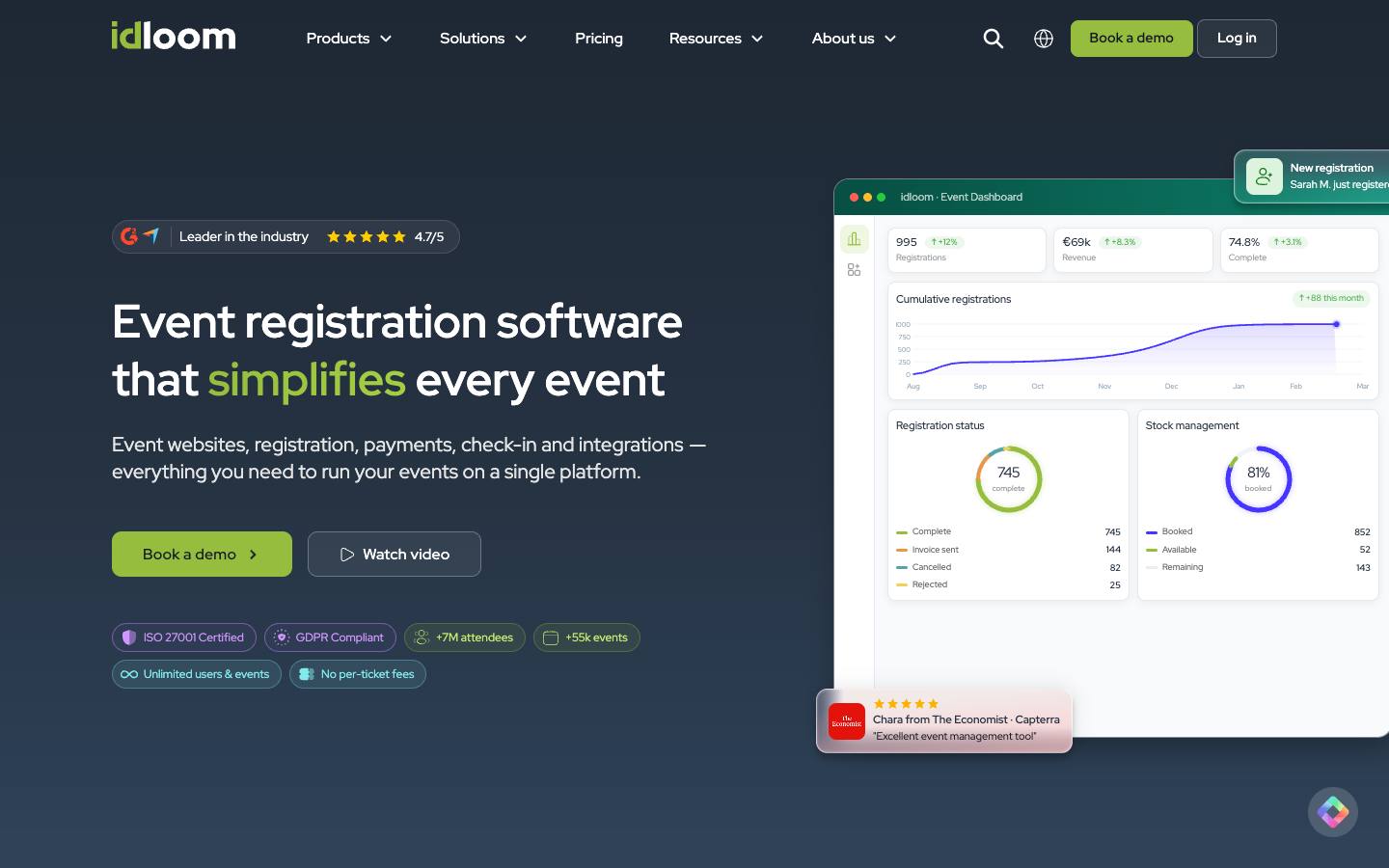
idloom is a Belgian event registration and ticketing platform from Waterloo, founded in 2015. It pairs conditional registration forms and ticketing with automatic invoicing, VAT handling, refunds, multiple currencies and accounting connectors, which is what finance teams at B2B buyers usually ask for. It charges a flat subscription with no per-ticket or per-attendee fees.
More on idloomLess on idloom
Founded: 2015 · HQ: Waterloo, Belgium · Team: 11–50 people · Formats: In-person, Virtual, Hybrid, Webinar
Published plans run from Light at €150 a month billed annually (one paid event at a time, unlimited users and free events) to Plus at €450, Premium at €550 and Corporate at €1,150 a month, which removes the cap on simultaneous paid events (checked October 2026). There's a 15-day trial and a free tier for small events. Payments run through Stripe, PayPal, Adyen or Mollie, and the platform connects to Salesforce, HubSpot, Microsoft Dynamics, SAP and Mailchimp, plus Zapier, webhooks and a REST API.
idloom documents ISO 27001 and lets customers choose EU or US data hosting on Google Cloud. Named customers include The Economist, BMW Group, Imperial College London, the NHS and Elsevier, and it adds badges, check-in and verifiable attendance certificates for training and CPD events. The main thing to plan for is the event cap: busy teams can outgrow Light quickly, and SSO and the mobile app are paid add-ons.
- Choice of EU or US data hosting, with ISO 27001 documented
What stands out
- Automatic invoices with VAT, refunds and multiple currencies
- Flat plans from €150 a month with no per-ticket fees
- Salesforce, HubSpot, Microsoft Dynamics and SAP connections
Worth checking
- Plans limit how many paid events can run at the same time
- SSO and the mobile app cost extra
Best suited for. idloom fits European associations, publishers and corporate teams that sell tickets to companies and need compliant invoices and CRM sync without per-ticket fees. If you only run one or two small paid events a year, a per-ticket tool such as Tito or Konfeo will cost less.

4. Eventzilla, best for training companies and associations selling many small paid workshops, courses and conferences
- Price
- From $1.50/registration
- Try it
- Free plan
- Capterra
- 4.4/5 from 393 reviews
- Syncs with
- Salesforce, HubSpot
- Security
- DPA
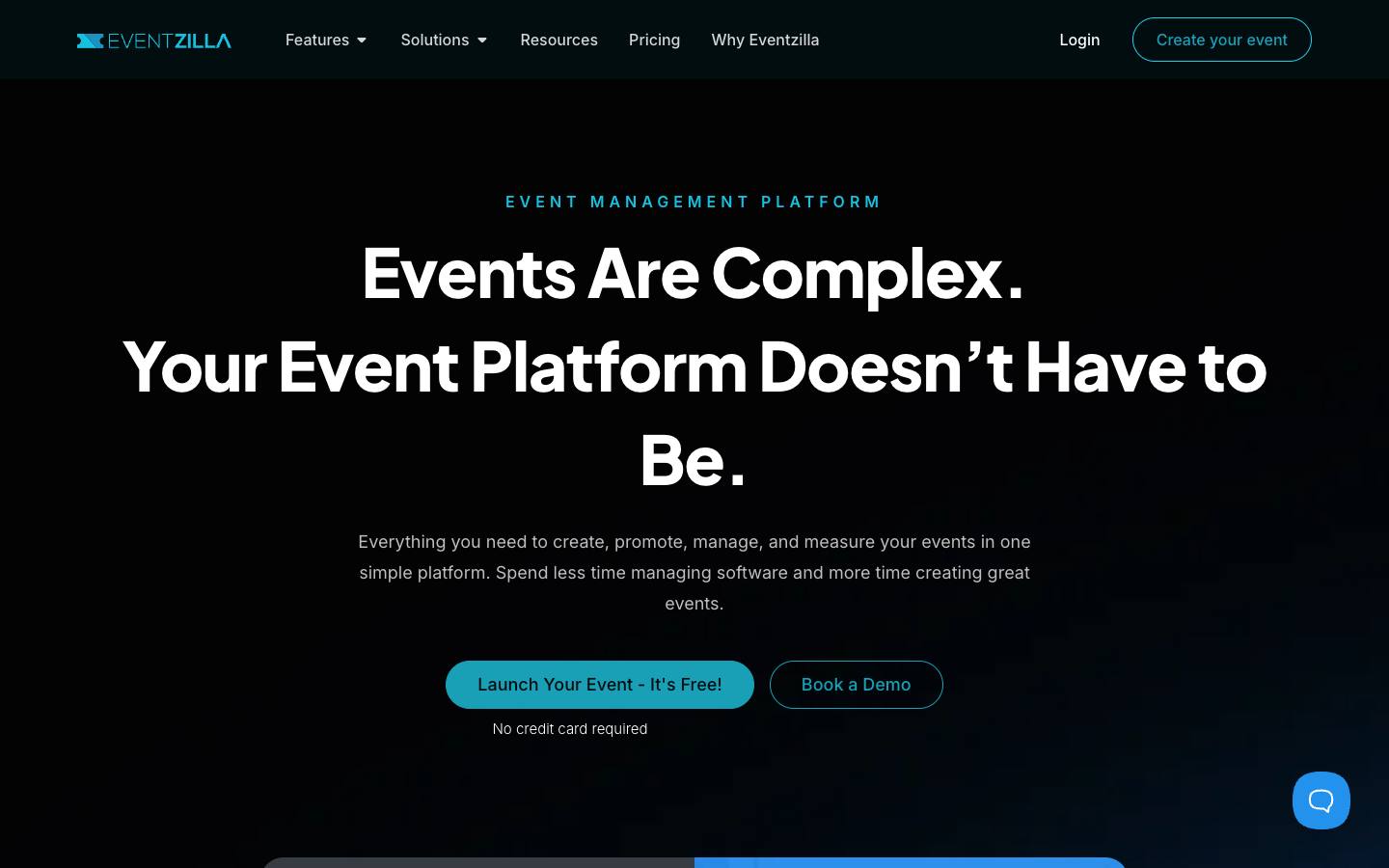
Eventzilla is a self-serve registration and ticketing platform from Dublin, Ohio, operating since 2009. It covers paid ticket types, seating plans, discount codes and name badges alongside a no-code event website builder, agenda tools, call for speakers, kiosk check-in and exhibitor lead capture, all without a sales call to get started.
More on EventzillaLess on Eventzilla
Founded: 2009 · HQ: Dublin, Ohio · Formats: In-person, Virtual, Hybrid, Webinar
Pricing is published per registration (checked October 2026). Basic is $1.50 per registration for free events; Pro adds paid ticket types, a seating plan designer and discount codes at 1.9% plus $1.50; and Plus at 2.9% plus $1.50 lets you pass all fees to attendees and adds white-labeled registration, speaker and sponsor management and a built-in virtual event hub. Teams with steady volume can switch to the Scale subscription, which starts at $200 a month billed annually with 500 registrations included and no per-registration fees; the comparison table on the same page lists annual pricing from $1,999 a year, so confirm the figure.
Eventzilla has a 4.41 rating from 393 Capterra reviews, the largest review base among the ticketing-first tools here. HubSpot, Mailchimp and Zapier integrations come with Pro and above, with a REST API and webhooks for the rest. The gaps are on the enterprise side: no security certifications or named customers are published, and the Scale plan's pricing has been shown inconsistently on the pricing page, so confirm it with sales.
- 4.41 rating from 393 Capterra reviews
What stands out
- Per-registration pricing from $1.50, with paid tickets at 1.9% or 2.9% plus $1.50
- Option to pass fees on to ticket buyers
- Seating plan designer, discount codes and name badges
Worth checking
- No security certifications or named customers published
- Scale plan pricing should be confirmed with sales
Best suited for. Eventzilla suits training providers, associations and small marketing teams that sell lots of modestly priced tickets and want everything self-serve. Larger organizers with procurement reviews or native Salesforce requirements should look at idloom or Accelevents.

5. Accelevents, best for flagship paid conferences that need ticketing, onsite badging and CRM sync in one platform
- Price
- From $7,500/event
- Try it
- Free trial
- Capterra
- 4.7/5 from 164 reviews
- App Store
- 3.7/5 from 23 ratings
- Languages
- English
- Syncs with
- Salesforce, HubSpot, Marketo
- Security
- SOC 2 Type II, ISO 27001, SAML SSO
- Customers include
- University of Waterloo, Carnival Cruise Line, Payoneer
Accelevents is a Boston-based event management platform, founded in 2015, that sells tickets as part of a fuller toolkit: registration websites with unlimited registration types, check-in and badge printing, exhibitor and sponsor management, an attendee app and lead capture. It's the option here for teams whose paid conference also needs onsite operations and sponsor revenue.
More on AcceleventsLess on Accelevents
Founded: 2015 · HQ: Boston, MA · Team: 51-200 people · Formats: In-person, Virtual, Hybrid, Webinar
Starting prices are published (checked October 2026): Professional from $7,500 for a single event and Business from $13,500 for unlimited events, with Enterprise and White Label quoted. Every plan includes unlimited admin seats and an MCP server, and 24/7 support is listed on all plans. The payment gateway list is long for a B2B platform, covering Stripe, Square, Authorize.net, Adyen, Checkout.com, CyberSource, NMI, PayPal Braintree, PayFlow and TouchNet, which helps universities and associations that must use a specific processor.
Native connectors cover Salesforce, HubSpot, Marketo, Oracle Eloqua and Pardot, plus association management systems such as netFORUM and Novi. Accelevents documents SOC 2 Type II and ISO 27001, holds a 4.73 rating from 164 Capterra reviews and names customers including Amazon Robotics, Zapier, Deloitte, Carnival Cruise Line and Payoneer. Virtual delivery, SSO and the branded mobile app are paid add-ons, and the entry plan covers only one event.
- Kiosk check-in, badge printing and exhibitor lead capture included
What stands out
- Ten named payment gateways, including CyberSource and TouchNet
- Native Salesforce, HubSpot, Marketo and Eloqua connectors
- SOC 2 Type II and ISO 27001 documented
Worth checking
- Professional covers a single event; multi-event programs need Business at $13,500 or above
- Virtual hub, SSO and the mobile app are add-ons
Best suited for. Accelevents fits marketing and association teams running a large paid conference where ticketing, sponsors, onsite badging and CRM attribution have to live together. It's more platform than a team selling a handful of workshop tickets needs.

6. Checkin.no, best for Nordic conferences that want automated invoicing, VAT settlement and local payment methods
From €1/ticket
- Price
- From €1/ticket
- Try it
- Free trial
- Languages
- English, Norwegian, Danish, Swedish
- Syncs with
- HubSpot
- Security
- DPA
- Customers include
- Nordic Growth Summit, TwentyThree, Crayon
Checkin is a Norwegian registration and ticketing platform from Kristiansand, founded in 2008, built around the finance side of paid events. It issues invoices automatically after confirmation, sends payment reminders, settles VAT and produces accounting reports, and it supports Nordic payment methods such as Vipps, MobilePay and Swish alongside cards.
More on Checkin.noLess on Checkin.no
Founded: 2008 · HQ: Kristiansand, Norway · Team: 11-50 people · Formats: In-person, Virtual, Hybrid
There's no licence or setup fee (checked October 2026). Free events cost €1 per ticket, and paid events cost €1 plus 2% per ticket, which adds branding, embeddable forms, card and mobile payments, automated invoicing and the HubSpot and Mailchimp integrations. Extras are priced separately, for example scanner rental at €75 and seat maps from €750. The page also shows a slightly different flat fee lower down, so confirm the current rate before you budget.
Customers include Schibsted, Oslo Business Forum, NDC Conferences, JavaZone and Crayon, which shows its strength with Nordic business and developer conferences. Native connectors cover HubSpot, Mailchimp, Zoom and Microsoft Teams, with Zapier and an API for the rest, and an MCP connection lets users query their own event data from Claude or ChatGPT at no extra cost. PCI DSS is documented and data stays in the EU and EEA, but enterprise CRM options beyond HubSpot are limited and the product is designed for the Nordic market.
- Waiting lists that reallocate released tickets automatically
What stands out
- €1 plus 2% per paid ticket, with no licence fee
- Automatic invoices, payment reminders and VAT settlement
- Vipps, MobilePay and Swish alongside card payments
Worth checking
- Fee figures on the pricing page are partly inconsistent
- Few native CRM connectors beyond HubSpot
Best suited for. Checkin suits Norwegian, Danish and Swedish organizers whose buyers expect local payment methods and proper invoices. Teams outside the Nordics or on Salesforce are better served by idloom or Accelevents.

7. Konfeo, best for European training providers and congresses that want low capped fees and automatic invoices
From €1/attendee
- Price
- From €1/attendee
- Try it
- Free plan
- Capterra
- 5.0/5 from 21 reviews
- Languages
- 8 languages
- Security
- DPA
- Customers include
- GUMed, Krakow University of Economics, Monterrey Institute of Technology
Konfeo is a self-funded Polish registration and ticketing tool from Gdynia, founded in 2012, aimed at conferences, congresses, training courses and seminars. It handles custom forms, ticket types, discount codes, group registration, payments through Stripe and PayPal, automatic PDF invoices (including Poland's KSeF e-invoicing), e-tickets with barcodes and check-in.
More on KonfeoLess on Konfeo
Founded: 2012 · HQ: Gdynia, Poland · Formats: In-person, Virtual
Pricing is per ticket with no subscription (checked October 2026). Free events cost €1 per attendee, the Lite plan for paid events charges 2% per ticket sold with a €1 minimum, and the Max plan charges €1 plus 4% with a cap of €7 per ticket. A single large conference can prepay €2,000 for unlimited registrations, and white-labelling costs €250. The same amounts apply in euros, dollars or pounds, net of VAT, and new accounts get five free tickets to start.
Konfeo is hosted in the EU, has a 4.95 rating from 21 Capterra reviews and names customers including NATO, Samsung, Volvo and Nokia. Event replication makes it easy to copy a course for a recurring series. The limits are on integrations and scope: there are no CRM or marketing automation connectors beyond per-event webhooks, no public API or Zapier listing, and no event app, virtual venue or lead retrieval.
- EU hosting and event replication for recurring courses
What stands out
- Paid tickets at 2% (Lite) or capped at €7 a ticket (Max)
- €2,000 flat option for one large congress
- Automatic invoices, including KSeF e-invoicing
Worth checking
- No CRM, Zapier or public API, only webhooks
- Registration and ticketing only, with no event app or lead retrieval
Best suited for. Konfeo fits European training companies and congress organizers that run recurring paid events and want predictable, capped fees with proper invoices. If sales needs ticket data in a CRM automatically, pick idloom or Accelevents instead.

8. Eventleaf, best for budget-conscious teams that want per-attendee pricing with ticketing and onsite badging together
From $1/attendee
- Price
- From $1/attendee
- Try it
- Free plan, Free trial
- Capterra
- 4.8/5 from 185 reviews
- App Store
- 4.2/5 from 6 ratings
- Syncs with
- Salesforce, HubSpot, Marketo
- Customers include
- Columbia University, Sysco, Accenture
Eventleaf, from Jolly Technologies in Redwood City, California, is event management software founded in 2012 that combines registration websites and tiered ticketing with check-in, badge printing, surveys, abstracts and exhibitor booth sales. It's used by universities, school districts, associations, government bodies and corporate teams running conferences, workshops and trade shows.
More on EventleafLess on Eventleaf
Founded: 2012 · HQ: Redwood City, CA · Formats: In-person, Hybrid, Virtual
Pricing is published per attendee with no contract (checked October 2026). Starter is free for up to 100 attendees a year, Basic is $1 per attendee, Professional is $2 per attendee and adds session check-ins, live polls and an attendee app, and Ultimate is quoted. On paid tickets Eventleaf adds a registration sales fee of 1% if you use your own processor or 4% with Eventleaf's processor, so bringing your own Stripe, PayPal or Authorize.Net account matters. Every plan includes unlimited events and users.
Eventleaf has a 4.8 rating from 185 Capterra reviews and names customers such as Columbia University, MIT, Sysco and Worldpay. Group registration, waitlists and tiered tickets are standard, and PCI DSS is documented. The catch for B2B teams is that Salesforce, HubSpot and Marketo connections, SSO and the lead retrieval app sit in the quote-based Ultimate plan, and SOC 2 isn't mentioned.
- 4.8 rating from 185 Capterra reviews
What stands out
- Free up to 100 attendees a year, then from $1 per attendee
- 1% sales fee when you use your own payment processor
- Group registration, waitlists and tiered ticketing
Worth checking
- CRM integrations, SSO and lead retrieval need the quote-based Ultimate plan
- 4% sales fee if you use Eventleaf's own processor
Best suited for. Eventleaf suits education, public-sector and association teams that want ticketing, check-in and badges at a low, predictable price per attendee. If CRM sync is essential from day one, compare the Ultimate quote with Accelevents or idloom.

9. KonfHub, best for conferences and summits in India and the Gulf that need UPI, WhatsApp and tax invoices
From INR 2/percent of ticket
- Price
- From INR 2/percent of ticket
- Try it
- Free plan
- Capterra
- 4.8/5 from 200 reviews
- Languages
- English
- Security
- DPA
- Customers include
- Dubai AI Festival, Dubai FinTech Summit, HODL Summit
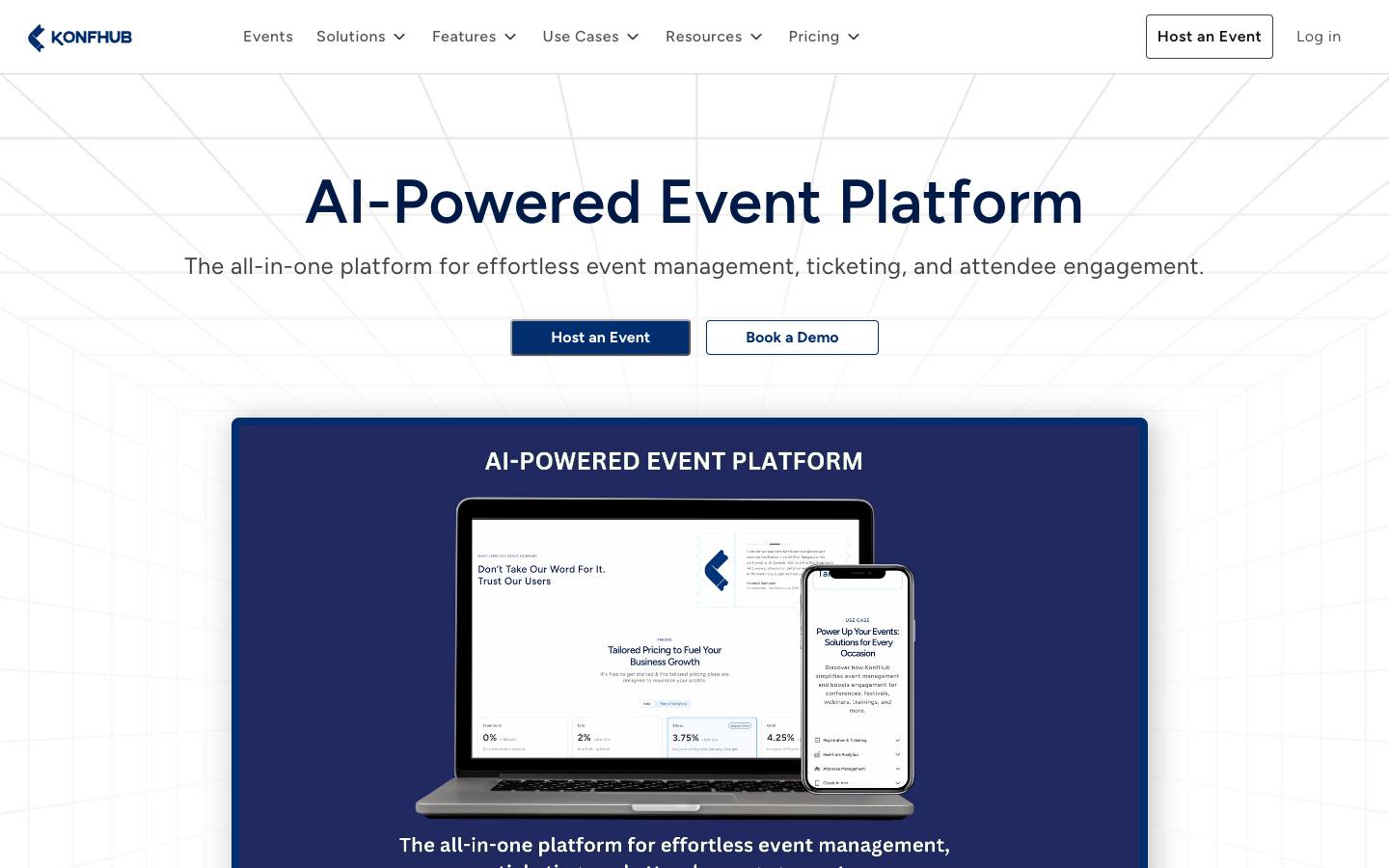
KonfHub is an event platform from Bengaluru, founded in 2019, that started with tech community conferences and now runs conferences, expos and summits across India and the Gulf. It covers ticketing with approvals, waitlists, group and discount codes and tax invoices, plus check-in apps, kiosks, badge printing, an event app, sponsor lead capture and post-event certificates.
More on KonfHubLess on KonfHub
Founded: 2019 · HQ: Bengaluru, India · Team: 11-50 people · Formats: In-person, Virtual, Hybrid, Webinar
Pricing is per event (India rates, checked October 2026). Free events are free up to 100 registrations, the Lite plan charges 2% plus 18% GST on paid tickets for up to 300 registrations with UPI payments only, Silver charges 3.75% plus GST including gateway charges for up to 2,500 registrations with all payment methods and a webhook and registration API, and Gold is custom. Payments run through Stripe, Razorpay and Tap Payments, and messaging covers email, WhatsApp and SMS.
KonfHub has a 4.78 rating from 200 Capterra reviews, and named events include Dubai AI Festival, Dubai FinTech Summit, HODL Summit and AWS User Groups India. It also offers face-recognition check-in and AI photo tools. The trade-offs: there are no native CRM or marketing automation connectors, with HubSpot and others reached through Zapier or n8n, and white-labeling, the event app and the exhibitor portal sit in the custom Gold tier.
- 4.78 rating from 200 Capterra reviews
What stands out
- Free for free events; paid tickets from 2% plus GST
- UPI, Razorpay, Stripe and Tap Payments support
- WhatsApp and SMS messaging alongside email
Worth checking
- No native CRM connectors; HubSpot runs through Zapier or n8n
- Event app, exhibitor portal and white-label need the custom Gold tier
Best suited for. KonfHub fits organizers selling tickets to audiences in India and the Gulf, where UPI, WhatsApp and GST invoices matter. For US or European B2B events with Salesforce in the stack, look at Accelevents or idloom.

10. Luma, best for paid meetups, workshops and side events where speed matters more than complex ticket rules
From $59/month
- Price
- From $59/month
- Try it
- Free plan
- Security
- SOC 2 Type II, DPA
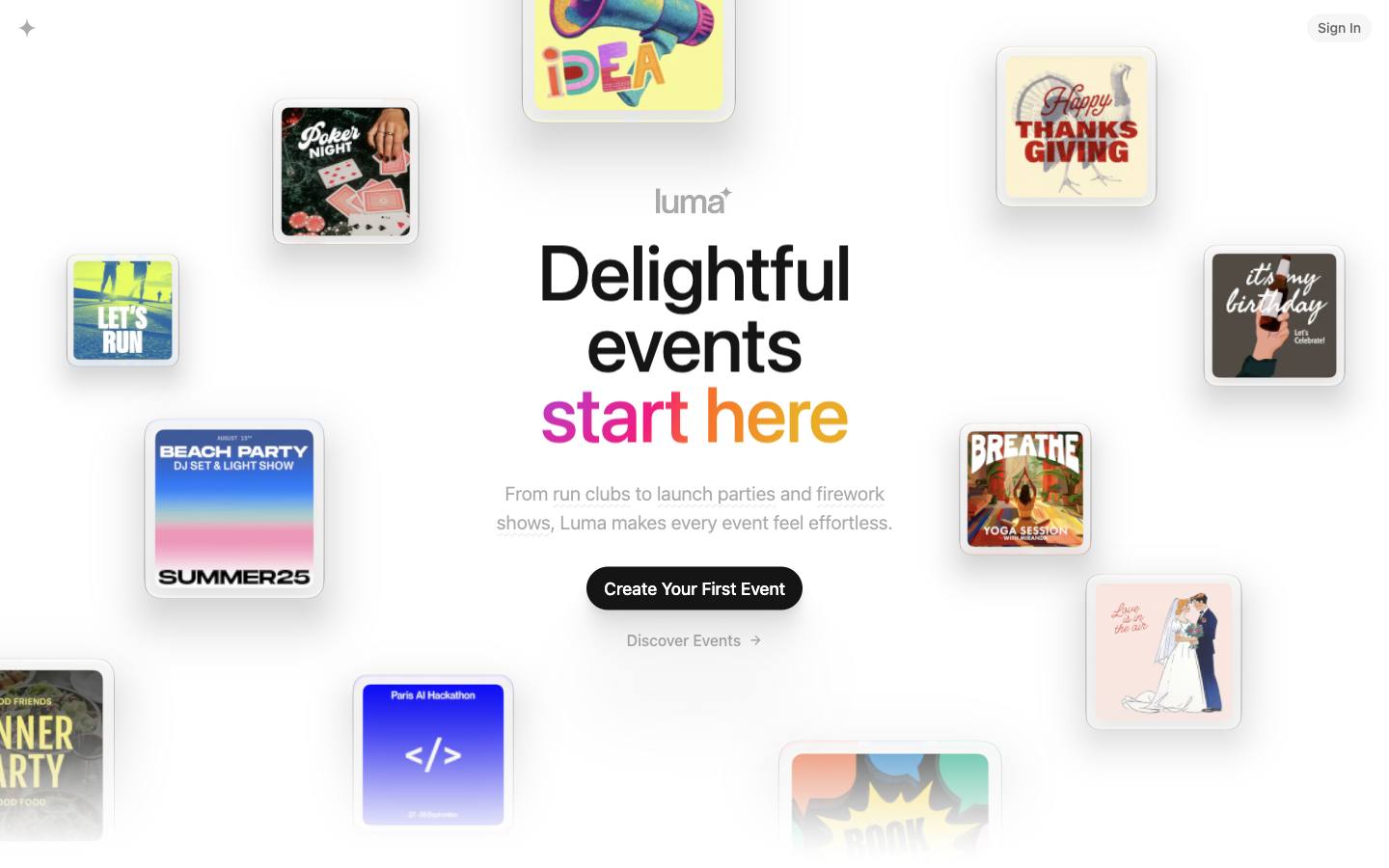
Luma is a self-serve event platform from San Francisco, founded in 2020, for publishing an event page, taking registrations and selling tickets in minutes. B2B marketing and community teams use it for paid workshops, meetups, dinners and side events around larger conferences, where attendees in tech often already have Luma accounts.
More on LumaLess on Luma
Founded: 2020 · HQ: San Francisco, CA · Formats: In-person, Virtual
The free plan covers unlimited events and guests but takes a 5% platform fee on paid tickets (checked October 2026). Luma Plus, at $59 a month billed annually, drops that fee to 0%, adds tax collection on tickets, raises email invites from 500 to 5,000 a week, and unlocks custom URLs, Zapier and API access. Payments run through Stripe, with Apple Pay and Google Pay for buyers, and approval-based registration lets you sell to a curated list. Enterprise adds SSO and advanced integrations on request.
SOC 2 Type II is documented, with a trust center and a published DPA. The limits are clear: Luma isn't built for multi-track conferences, exhibitors, invoicing for corporate buyers or complex registration paths, and CRM connections run through Zapier or the API rather than native connectors. It's a strong fit for the events around a conference rather than the conference itself.
- SOC 2 Type II documented
What stands out
- Free plan with unlimited events and guests
- Luma Plus at $59 a month removes the 5% ticket fee
- Approval-based registration for curated paid events
Worth checking
- No invoicing or multi-track conference features
- CRM sync only through Zapier or the API on Luma Plus
Best suited for. Luma suits community, developer relations and field marketing teams selling low-priced tickets to meetups, workshops and side events. For a flagship paid conference with corporate invoices, use Tito, pretix or idloom.

11. Swarmtix, best for developer meetups and small tech conferences that want the lowest published per-ticket fee
$0.99 + 1.5% per paid ticket
- Price
- $0.99 + 1.5% per paid ticket
- Try it
- Free plan
- Languages
- English
- Syncs with
- HubSpot
- Customers include
- CODE41, MK .NET Community
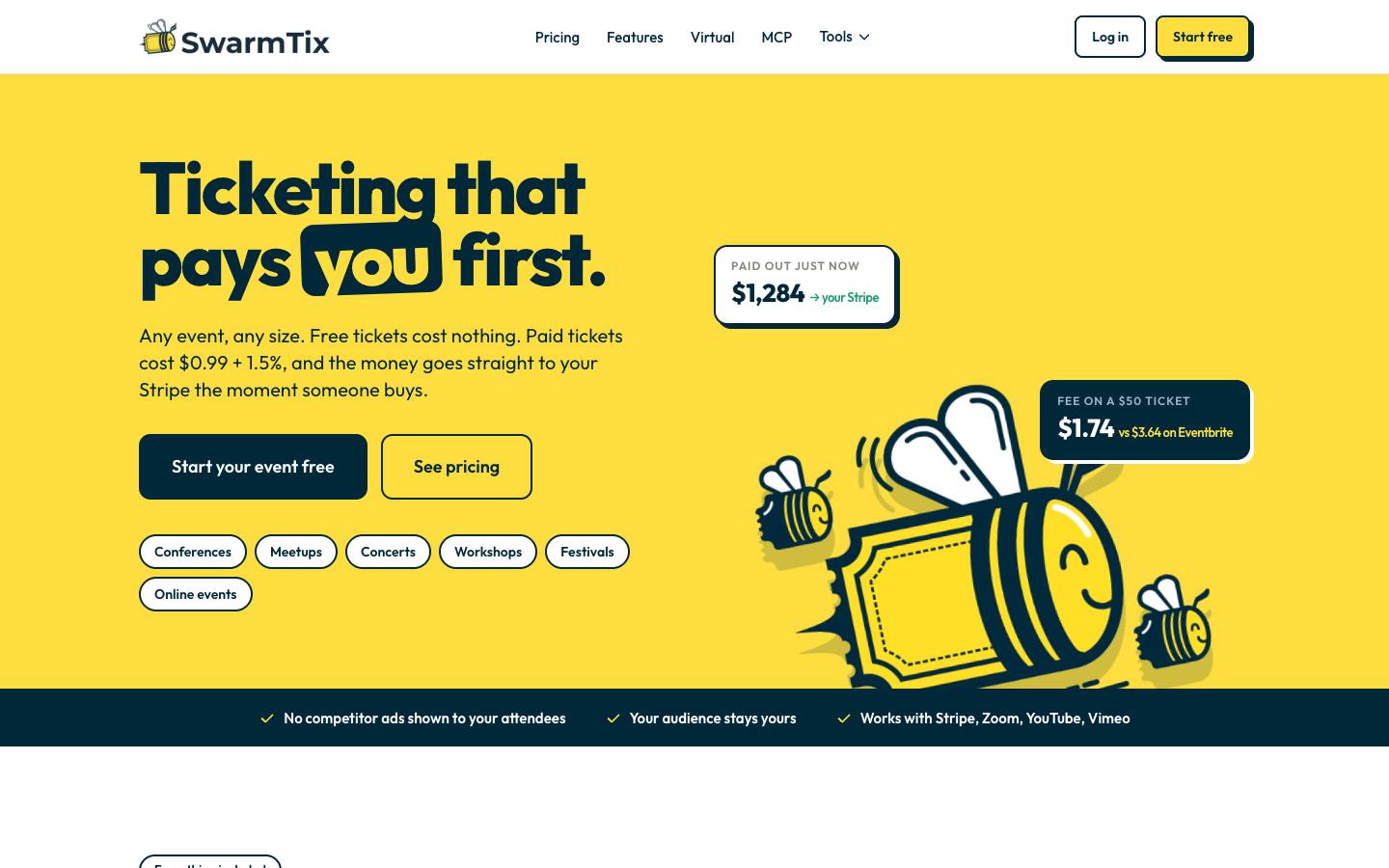
Swarmtix is a ticketing platform founded in 2017 and positioned as a lower-cost Eventbrite alternative for tech conferences, meetups and workshops. It charges a small fixed fee plus a percentage per paid ticket and pays out straight to the organizer's own Stripe account. It supports early bird, VIP, student, group and speaker passes with limits and sales windows.
More on SwarmtixLess on Swarmtix
Founded: 2017 · HQ: Sheridan, Wyoming · Formats: In-person, Virtual, Hybrid
The published fee is $0.99 plus 1.5% per paid ticket, with free tickets at no charge and Stripe processing billed separately (checked October 2026). A white-label add-on costs $20 a month or $200 a year. Beyond the checkout, Swarmtix offers reserved seating with sections, rows and seats, iOS and Android QR check-in apps with door sales, access delivery for Zoom, YouTube or Vimeo sessions, and planning calculators for break-even, budget and sponsorship.
It also ships an MCP server and an AI assistant that drafts event pages, which suits developer audiences. Integrations include Stripe, Zoom, Mailchimp, Slack, Google Calendar, QuickBooks and Zapier, with a HubSpot sync described as upcoming. This is a small vendor: named users are community events such as MK .NET Community and CODE41, its 500-plus events figure is self-reported, and no security documentation is published.
- MCP server and AI page assistant
What stands out
- $0.99 plus 1.5% per paid ticket, with free tickets free
- Instant payouts to the organizer's own Stripe account
- Reserved seating and QR check-in apps with door sales
Worth checking
- Small vendor with no security documentation
- HubSpot sync listed as upcoming rather than available
Best suited for. Swarmtix fits community-run tech conferences and meetups where every cent of fee matters and the buyer is an individual paying by card. Corporate buyers who need invoices or procurement paperwork are better served by idloom or Accelevents.

12. alf.io, best for technical organizers who want free, open-source ticketing they host and control themselves
Free (open source)
- Price
- Free (open source)
- Try it
- Free plan
- Languages
- 9 languages
- Security
- SAML SSO
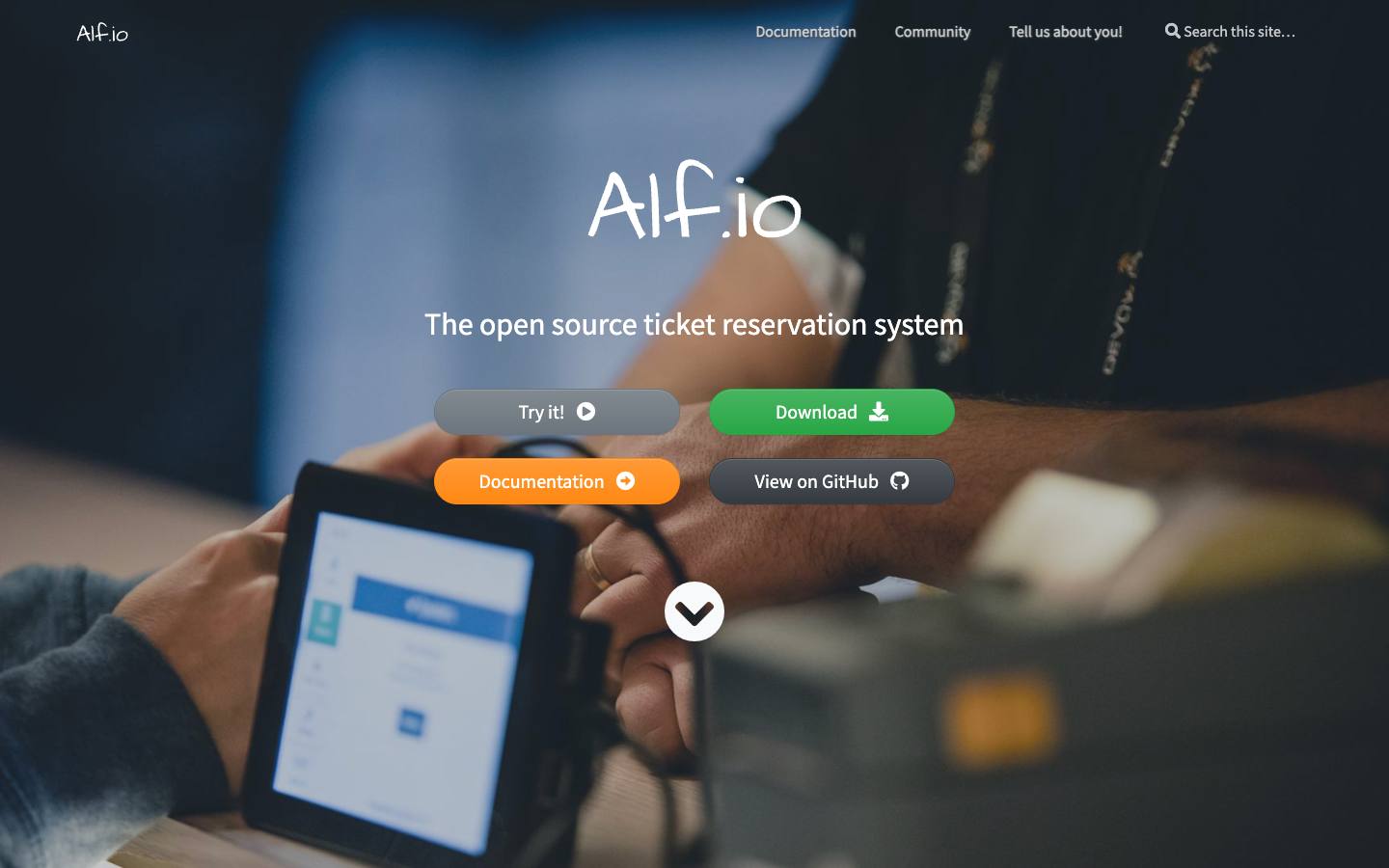
alf.io is an open-source (GPLv3) ticket reservation and attendance system, started in 2014 and maintained by a volunteer contributor community. It covers a public ticket shop, an organizer back office, a mobile scan app for check-in and sponsor lead capture, and an optional Raspberry Pi check-in station that works offline and prints badges.
More on alf.ioLess on alf.io
Founded: 2014 · Formats: In-person, Virtual
The software itself is free (checked October 2026). Organizers pay only their own hosting and payment processor fees, and attendees don't have to create an account to buy. Payment options include Stripe, Mollie, PayPal, Revolut, bank transfer and pay at the door, and tickets can go to Apple Wallet and Google Wallet. Anonymous statistics and IP scrambling are on by default, and card data is handled by the payment provider rather than alf.io.
The cost is your time. Self-hosting means someone on your team handles deployment, upgrades and security, formal support and SLAs come only through the commercial partner Swicket, which sells managed hosting at unpublished prices, and CRM connections need the scripting extension system or the Swicket version. There's no event website builder or marketing automation, and no named customers are published. For a technical team that already runs its own infrastructure, though, it removes per-ticket fees entirely.
- Sponsor lead capture in the same scan app
What stands out
- Free and open source, with no platform fee per ticket
- Bank transfer and pay-at-the-door options alongside cards
- Offline Raspberry Pi check-in stations that print badges
Worth checking
- Self-hosting needs technical skills for setup, upgrades and security
- No CRM sync or marketing tools out of the box
Best suited for. alf.io suits developer conferences and technical communities with in-house engineers who want full control of ticket data and no platform fees. Teams without someone to run servers should pick a hosted tool such as pretix or Tito.
Picks 6 to 12 are folded to keep the list short. Open any of them, or compare them all in the table above.
Also worth considering
Eventbrite, Ticket Tailor, Zoho Backstage, Swoogo, Bizzabo, Cvent, Invajo, TicketForEvent, Evenea, ADITUS, Eventilla, Zuddl
The best event ticketing software for B2B events by use case
| If you need | Company size | Look at |
|---|---|---|
| Developer conference selling passes from its own website | Startup, Mid-market | Titoembedded checkout with a capped 3% fee |
| Trade fair or publisher needing seating, box office and onsite access control | Mid-market, Enterprise | pretix2.5% capped at €15, plus self-hosting |
| European association invoicing companies for several paid events a year | Mid-market, Enterprise | idloomVAT invoices and no per-ticket fees |
| Training company selling dozens of small paid workshops | Startup, Mid-market | Eventzillaself-serve per-registration pricing |
| Flagship paid user conference with sponsors, badging and Salesforce | Mid-market, Enterprise | Acceleventsticketing, onsite and CRM in one platform |
| Nordic business conference with buyers paying by Vipps, Swish or invoice | Startup, Mid-market | Checkin.nolocal payments and automated VAT settlement |
| Summit in India or the Gulf selling to UPI and card buyers | Startup, Mid-market | KonfHubUPI, WhatsApp and GST invoices |
| Paid workshops and side events around a larger conference | Startup, Mid-market | Lumafastest setup, 0% fee on Luma Plus |
What results look like
Figures customers report in the vendors' own published case studies. They describe one customer each, not what every buyer should expect.
30,000
Learners
Clarins with idloom · Case study
23,500
Registrants
University of Waterloo with Accelevents · Case study
10,000+
Business leaders
Dubai AI Festival with KonfHub · Case study
How to choose
Background on what these tools do, how we ranked them and what to check before you buy. Open any topic.
What event ticketing software for B2B events actually are (and what they aren't)
Event ticketing software sells access to an event. It builds the ticket shop or checkout, defines ticket types and prices (early bird, member, group, VIP), takes payment, applies discount codes, issues tickets and receipts or invoices, and pays the money out to the organizer. Most tools also handle refunds, transfers, capacity limits, waitlists and check-in on the day.
It isn't the same as event registration software, which focuses on collecting attendee details and applying registration rules, often for free or invitation-only events. The two overlap heavily and many platforms do both, but ticketing tools are judged on fees, payouts, tax handling and checkout conversion. It also isn't a consumer ticket marketplace: the tools here are built for organizers selling directly to professionals, not for discovery by the general public. Full event management software adds agendas, sponsors, apps and onsite operations on top of ticketing.
For B2B teams, ticketing does a few specific jobs. It turns a conference into revenue with tiered pricing and group discounts, produces invoices that a buyer's finance team will accept, keeps buyer and attendee records separate when one person buys for a team, and feeds that data into the CRM so sales can see which accounts paid to attend.
How we ranked these event ticketing software for B2B events
We checked each tool against the jobs a B2B organizer selling tickets needs done, using vendor pricing pages and our own vendor research checked in October 2026.
1. Published ticket fees
Whether the per-ticket percentage, fixed fee, cap or subscription price is published on the vendor's pricing page, and what it includes.
2. Payment and payout control
Which payment gateways are supported and whether money goes to the organizer's own processor account, checked on vendor pages.
3. Invoices and tax
Whether the tool issues invoices with VAT or sales tax and supports pay-by-invoice, checked in product documentation and our vendor profiles.
4. Ticket types and seating
Support for tiered, group and discounted tickets, waitlists and reserved seating, from vendor feature pages.
5. CRM and data sync
Native Salesforce or HubSpot connectors versus Zapier, webhooks or an API, from vendor integration pages.
6. Security documentation
Whether ISO 27001, SOC 2 or PCI DSS is documented on the vendor's site, from our procurement research.
More on our process in the methodology.
What to look for in event ticketing software
Start with the money. Check the fee model (percentage, fixed fee, cap or subscription), whether you can pass fees to buyers, which payment processors are supported and whether payouts go straight to your own account or are held until after the event. Then check the B2B basics: tiered and group tickets, discount and member codes, waitlists, and the ability for one buyer to purchase several tickets and assign them to colleagues. Finally, check what happens after checkout: invoices with tax details, refunds and transfers, and how buyer data reaches your CRM.
How much event ticketing software costs
Published prices in our data fall into three models. Per-ticket tools charge a percentage, often with a cap: Swarmtix at $0.99 plus 1.5%, pretix at 2.5% capped at €15, Konfeo at 2% or capped at €7, Tito at 3% capped at €25, Checkin at €1 plus 2%, and Luma at 5% on its free plan. Per-registration and per-attendee tools include Eventzilla (from $1.50 per registration, plus 1.9% or 2.9% on paid tickets) and Eventleaf ($1 to $2 per attendee plus a 1% or 4% sales fee). Flat subscriptions include idloom from €150 to €1,150 a month billed annually, Eventzilla Scale from $200 a month billed annually (or $1,999 a year in its comparison table) and Accelevents from $7,500 for a single event. Payment processing fees from Stripe, PayPal or similar usually come on top.
Event ticketing vs. event registration software
Registration software is built around collecting attendee details and applying rules, such as approval workflows, registrant types and session selection, and it's often used for free or invite-only events. Ticketing software is built around selling: fees, checkout, payouts, invoices, seating and refunds. Many tools do both, so the practical question is which job dominates. If most of your events are paid and finance cares about invoices and fees, shortlist from this guide; if most are free and the hard part is audience rules and CRM records, start with our event registration software guide.
Invoices, VAT and corporate buyers
B2B tickets are often bought by a company, not the attendee. That means invoices with the buyer's company name and tax ID, pay-by-invoice or purchase order options, and correct VAT or sales tax. In our data idloom, Checkin and Konfeo issue invoices automatically, pretix supports Peppol and ZUGFeRD e-invoicing through plugins, and KonfHub issues GST tax invoices. Per-ticket tools aimed at individual buyers, such as Luma or Swarmtix, are lighter on this, so test the invoice your finance team would actually receive.
Questions to ask ticketing vendors
Ask for the all-in cost of selling one ticket at your real price, including platform fee, cap, payment processing and any tax on the fee. Ask when payouts arrive and whether funds are held for refunds or chargebacks. Ask whether the buyer and each attendee are stored as separate records, and which fields sync to Salesforce or HubSpot natively versus through Zapier. Ask how refunds, transfers and name changes work, whether you can sell at the door, and which security documents (ISO 27001, SOC 2, PCI DSS) they can share.
Where this fits in your event tech stack
Ticketing sits between your event website and your finance and CRM systems. Upstream, the ticket shop is usually embedded in your own site or event page (Tito, pretix and Konfeo all offer embeddable widgets). Downstream, payments land in your Stripe, PayPal or other processor account, invoices go to accounting, and buyer and attendee records should reach the CRM: natively with Accelevents and idloom, or through Zapier, webhooks and APIs with most per-ticket tools. On the day, the same attendee list drives check-in and badge printing, which pretix, Eventzilla, Eventleaf, KonfHub and Accelevents include, and it feeds the event app and lead capture tools your exhibitors use.
FAQ
What is event ticketing software?
How much does event ticketing software cost?
What is the cheapest ticketing platform for paid B2B events?
How do ticketing fees and payouts work?
What's the difference between event ticketing and event registration software?
Which event ticketing software integrates with Salesforce or HubSpot?
Can event ticketing software issue VAT invoices for corporate buyers?
Is there free event ticketing software?
Pick the fee model first
Work out what one ticket at your real price costs to sell on each shortlisted tool.
Include the platform fee, any cap and payment processing.
Then check the invoice your buyers' finance teams will receive.
Confirm how buyer and attendee data reaches your CRM.
Those four checks narrow most shortlists to two or three tools.
Ready? Build your shortlist in two minutes, or try the free event software RFP builder.
Get a free shortlistKeep reading
Ratings link to their source and are shown as published on the date of our last check. Read our methodology.